
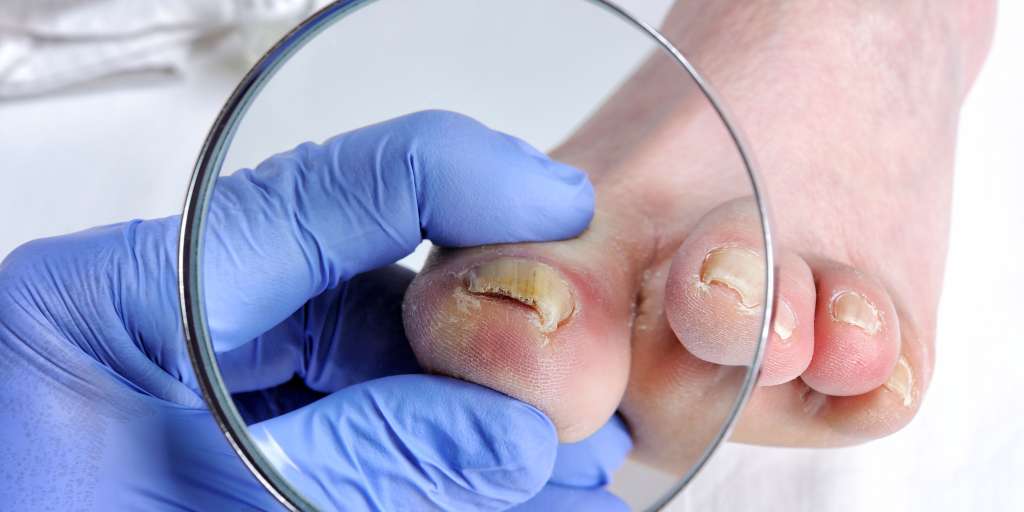
Knowing what nail fungus looks like, what causes it and how it is treated can help you address the infection before it progresses.
What is Nail Fungus?
Nail fungus, medically known as onychomycosis, is a common infection that affects the toenails far more often than the fingernails.
Anyone searching for a dermatologist in Arlington, VA, after noticing a discolored or thickened nail is dealing with one of the most frequent reasons people schedule a nail evaluation.
How Can I Tell if There is an Infection?
The infection usually begins as a small white or yellow spot beneath the tip of the nail, and it spreads gradually from there.
As the fungus works its way deeper, the nail can thicken, change color, and eventually become brittle or crumbly along the edge.
Several different organisms can cause the infection, and dermatophytes are responsible for most cases, though molds and yeasts can be involved as well.
Nail fungus often develops after a related infection, such as athlete’s foot, and spreads from the skin of the foot into the nail itself.
Who Is Most at Risk for Nail Fungus?
Age is one of the strongest risk factors, and nail fungus becomes considerably more common after age 60.
A weakened immune system, whether from diabetes, certain medications, or another underlying condition, also raises the likelihood of developing an infection that is harder to clear.
Damp, shared environments such as locker rooms, public showers, and swimming pool decks give fungi an easy opportunity to spread from person to person.
Tight shoes, sweaty feet, and nails that stay damp for long stretches of the day create similar conditions where fungus can take hold.
Certain skin conditions raise the risk as well, and psoriasis is one of the more common examples, because it can already affect the structure and appearance of the nails before fungus ever enters the picture.
Distinguishing nail changes caused by psoriasis from those caused by a fungal infection often requires a closer professional look, because the two can appear strikingly similar.
How Is Nail Fungus Diagnosed?
Diagnosing toenail/nail fungus in Arlington, VA, typically starts with a visual examination. Your dermatologist will examine the affected nail and look for common signs of nail fungus.
The nail may then be scraped or a small piece trimmed and sent for lab testing to confirm the type of organism involved. This step matters because several other conditions can mimic nail fungus, and starting the wrong treatment can waste months of effort.
How Is Nail Fungus Treated?
Unfortunately, there are multiple types of nail fungus, so treatment can be challenging. However, there are many options that can be used to address the condition.
Treatment usually involves nail lacquers and topical antifungal creams for milder cases or an oral antifungal medication for infections that have progressed further. Laser therapy is sometimes used as an additional option.
Because nails grow slowly, clearing an infection is a gradual process that often takes several months to a year.
A combination of approaches tends to work better than relying on a single method, and patience matters throughout treatment because visible improvement takes time to appear.
Even after successful treatment, nail fungus can return, which is why many treatment plans include guidance on reducing future risk.
How Can I Prevent an Infection?
The key to keeping fungal infections at bay is to practice good foot and hand hygiene. This includes:
- Keeping your nails clean and dry
- Regularly washing your hands and feet
- Trimming the nails to prevent ingrown nails
- Wearing moisture-wicking socks and breathable shoes
- Using powder or antifungal sprays in your shoes
- Not sharing footwear, as some fungal infections are contagious
Why Choose Dr. Yousefi for Nail Fungus Treatment in Arlington, VA?
Marjan Yousefi, M.D. is a board-certified dermatologist and Fellow of the American Academy of Dermatology, training that supports accurate identification of nail fungus and the other nail conditions that can resemble it.
That distinction matters most when the appearance of a nail could be explained by several different causes at once.
A thorough evaluation considers your nail history, any related skin conditions, and your overall health before recommending a treatment approach, rather than assuming every discolored nail has the same cause.
This individualized process helps ensure the treatment plan fits what is really causing the problem.
Ongoing guidance on foot and nail care, including how to reduce moisture and avoid reinfection, is typically part of a complete treatment plan rather than an afterthought.
Addressing the habits that allowed the infection to develop in the first place is often what keeps it from coming back.
Schedule a Nail Fungus Evaluation in Arlington, VA
Contact us online or call 703-255-5070 to schedule a nail evaluation and start treatment before the infection has a chance to spread further. New and existing patients can also book an appointment online